Despite living in Tucson for most of my life, I had never made it to the Tucson Festival of Books. Every March it fills the UA Mall for a weekend, and every March something else came up. This year a work opportunity finally got me there — I volunteered to represent my company at the Saturday morning session alongside my coworker Jay.
The morning was cooler than you would expect for a Tucson March. The Mall was already humming when we arrived to set up: rows of white tents stretching across the grass, a steady crowd despite the early hour. Authors, publishers, food vendors, nonprofits, and apparently every cultural organisation in southern Arizona all had a presence. The philosophy club had a tent pitched right next to ours.
The festival is, at its core, a gathering around books and ideas. Authors — local and well-known — set up to sell and sign; panels run throughout the day on topics ranging from literary fiction to science communication. Around the edges of all that are the things that make it feel like a proper festival: ethnic food stalls, live music, and enough foot traffic to make you feel like the whole city showed up.
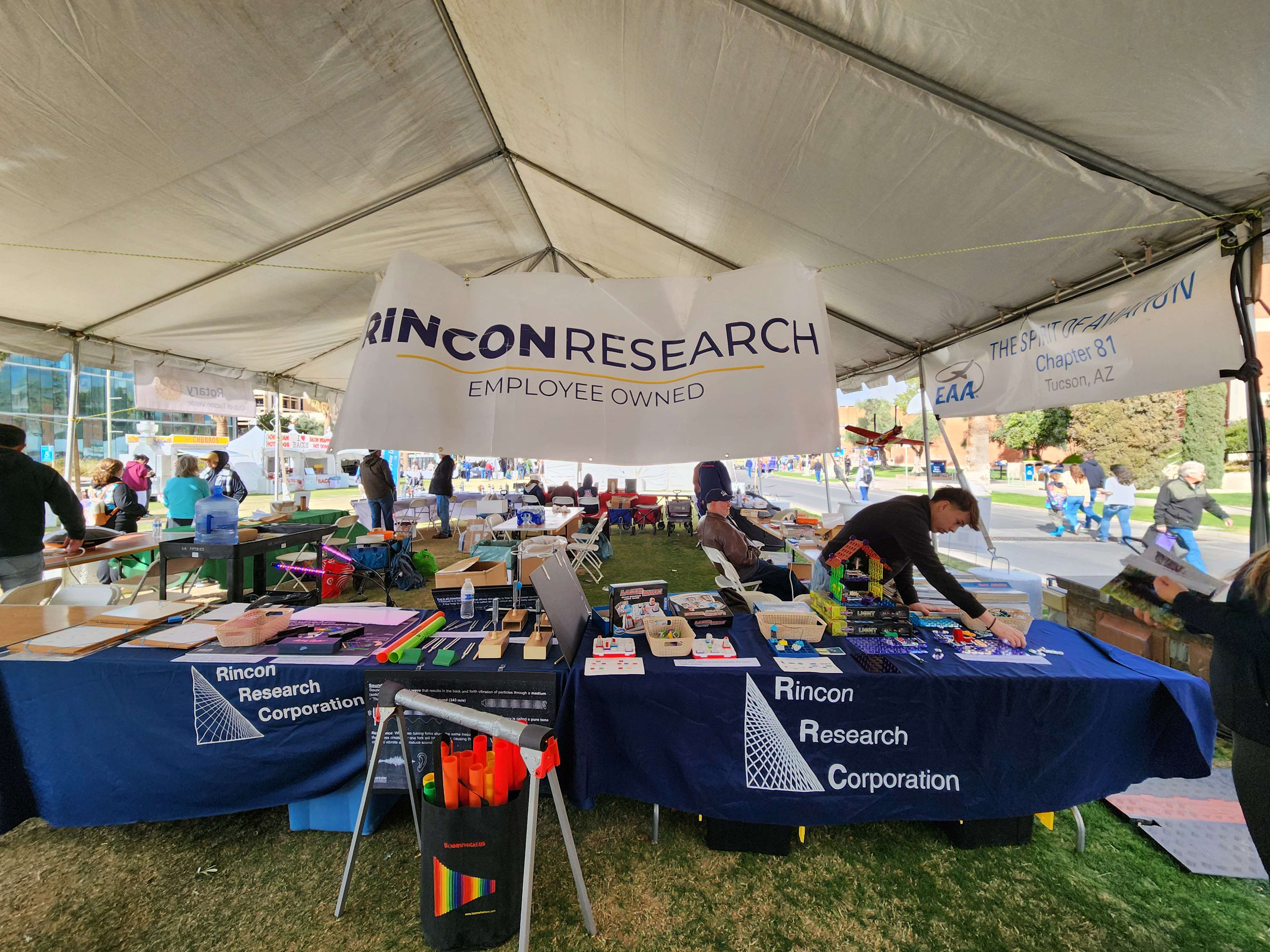
Our booth was in the Everyday Life section of Science City, where we introduced kids to the physics behind things they encounter daily. Waves were the theme: geolocation, optics, sound, and basic circuits, each with a hands-on toy or puzzle. The circuit activities were the most revealing — explaining the direction of current flow to a six-year-old turns out to be genuinely difficult. You strip away the usual abstractions and realise you are not entirely sure how to explain it yourself. The kids were mostly between four and nine, and their questions were the best kind: blunt, specific, and occasionally unanswerable.
I was there from nine until noon, long enough to get a feel for the place but not long enough to actually explore it. The food stalls were something I would go back for — we were too busy to break away from the booth, and by the time we packed up I was ready to leave rather than navigate the remaining crowds.
It is one of those events that rewards you more the more you put into it. I showed up as a volunteer with a specific job to do, which meant I saw one corner of it well and the rest barely at all. Next time I would go as an attendant — no booth, no schedule, just the festival.